Disclaimer: Articles in Work: The Illustrated Weekly Journal for Mechanics describe materials and methods that would not be considered safe or advisable today. We are not responsible for the content of these magazines, and cannot take any responsibility for anyone attempting projects or procedures described therein.
The first issue of Work was published on March 23rd, 1889. The goal of this project is to release digital copies of the individual issues starting on the same date in 2012, effectively republishing the materials 123 years to the day from their original release.
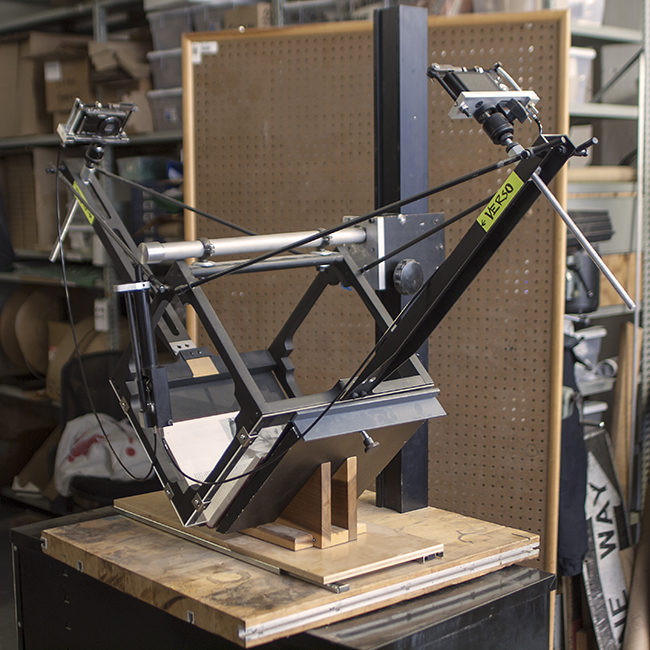
The original printing was on thin, inexpensive paper. There are many cases of uneven inking and bleed-through from the page behind. Our copies of Work come from bound library volumes of these issues and are subject to unfavorable trimming, missing covers, etc. To minimize harm to these fragile volumes, we've undertaken the task of scanning the books ourselves. We do considerable post processing of the scans to make them clear but please bear with us if a margin is clipped too close, or a few words are unreadable. We would like to thank James Vasile and Karl Fogel for their help in supplying us with a book scanner and generally enabling this project to get off the ground.
You are welcome to download, print, and pretty much do what you want with the scan for your own personal purposes. Feel free to post a link or a copy on your blog or website. All we ask is a link back to the original project and this blog. We are not answering requests for commercial downloads or reprinting at this time.

It just so happens that today, the appearance of "A Kitchen Dresser" by David Denning coincides with the unveiling of some new Universal Wedgegrip Clamps in our store. Normally, I don't shill new products so unabashedly in this blog, but today I can't help thinking that this project and the new clamps might go nicely together.
Besides the auspicious coincidence of their shared release date, it is also worth pointing out that Kitchen Storage & Woodworking Clamps share the distinction of being something one can never have too much of, only too little.
Disclaimer: Articles in Work: The Illustrated Weekly Journal for Mechanics describe materials and methods that would not be considered safe or advisable today. We are not responsible for the content of these magazines, and cannot take any responsibility for anyone attempting projects or procedures described therein.
The first issue of Work was published on March 23rd, 1889. The goal of this project is to release digital copies of the individual issues starting on the same date in 2012, effectively republishing the materials 123 years to the day from their original release.
The original printing was on thin, inexpensive paper. There are many cases of uneven inking and bleed-through from the page behind. Our copies of Work come from bound library volumes of these issues and are subject to unfavorable trimming, missing covers, etc. To minimize harm to these fragile volumes, we've undertaken the task of scanning the books ourselves. We do considerable post processing of the scans to make them clear but please bear with us if a margin is clipped too close, or a few words are unreadable. We would like to thank James Vasile and Karl Fogel for their help in supplying us with a book scanner and generally enabling this project to get off the ground.
You are welcome to download, print, and pretty much do what you want with the scan for your own personal purposes. Feel free to post a link or a copy on your blog or website. All we ask is a link back to the original project and this blog. We are not answering requests for commercial downloads or reprinting at this time.

Disclaimer: Articles in Work: The Illustrated Weekly Journal for Mechanics describe materials and methods that would not be considered safe or advisable today. We are not responsible for the content of these magazines, and cannot take any responsibility for anyone attempting projects or procedures described therein.
The first issue of Work was published on March 23rd, 1889. The goal of this project is to release digital copies of the individual issues starting on the same date in 2012, effectively republishing the materials 123 years to the day from their original release.
The original printing was on thin, inexpensive paper. There are many cases of uneven inking and bleed-through from the page behind. Our copies of Work come from bound library volumes of these issues and are subject to unfavorable trimming, missing covers, etc. To minimize harm to these fragile volumes, we've undertaken the task of scanning the books ourselves. We do considerable post processing of the scans to make them clear but please bear with us if a margin is clipped too close, or a few words are unreadable. We would like to thank James Vasile and Karl Fogel for their help in supplying us with a book scanner and generally enabling this project to get off the ground.
You are welcome to download, print, and pretty much do what you want with the scan for your own personal purposes. Feel free to post a link or a copy on your blog or website. All we ask is a link back to the original project and this blog. We are not answering requests for commercial downloads or reprinting at this time.

Honestly people, this is going to be one of those weeks where I tell you to get inspired by Work, and then go learn the technique elsewhere.
I like canoes. I used to canoe the lake near home with my dad when I was just old enough to hang onto the paddle. My first merit badge was for canoeing. I've never built one though. It seems inevitable that one day I will try. Will I consult Work when I do? Helpful as it has been in the past, I think not. The article reads like the crib notes for open-heart surgery.
It's likely the case that the contributor, "An Old Oarsman," is so entrenched in his subject that a naif like me can't follow. Still, this issue devotes just a bit more than a single page to the task. By the end he's already seating the step of the mast. Oh I forgot to mention that this canoe has a mast.
Nope, this time I'm going to smile and nod and then go get a copy of Building the Maine Guide Canoe. Chances are I'll be better equipped to parse frenzied Oarsman after that.
The nuclear option, of course, would be to take a class. Thankfully, these modern times have not left us entirely bereft of such instruction. Build Your Own Sassafras Canoe looks like a pretty serious class that gains you a fairly nimble craft, if you'll permit the double entendre.
Disclaimer: Articles in Work: The Illustrated Weekly Journal for Mechanics describe materials and methods that would not be considered safe or advisable today. We are not responsible for the content of these magazines, and cannot take any responsibility for anyone attempting projects or procedures described therein.
The first issue of Work was published on March 23rd, 1889. The goal of this project is to release digital copies of the individual issues starting on the same date in 2012, effectively republishing the materials 123 years to the day from their original release.
The original printing was on thin, inexpensive paper. There are many cases of uneven inking and bleed-through from the page behind. Our copies of Work come from bound library volumes of these issues and are subject to unfavorable trimming, missing covers, etc. To minimize harm to these fragile volumes, we've undertaken the task of scanning the books ourselves. We do considerable post processing of the scans to make them clear but please bear with us if a margin is clipped too close, or a few words are unreadable. We would like to thank James Vasile and Karl Fogel for their help in supplying us with a book scanner and generally enabling this project to get off the ground.
You are welcome to download, print, and pretty much do what you want with the scan for your own personal purposes. Feel free to post a link or a copy on your blog or website. All we ask is a link back to the original project and this blog. We are not answering requests for commercial downloads or reprinting at this time.

Lately, people have been coming up to me and showing off ambitious projects. It's great. I love to hear about people punching above their weight at the workbench. For instance, two days ago I saw an early American pocket watch that was smuggled out of the Warsaw Ghetto restored to its former glory and keeping astoundingly accurate time. This afternoon, a visitor to our shop on vacation showed me photos of his baroque and neoclassical furniture projects, complete with ornamental bronze hardware cast in his own home-built foundry.
Bold forays into complex and difficult arenas of craft and production are the very spirit of Work and its contributors. Now that I have laid eyes on a year's worth of issues, I'm starting to see contemporary examples of that spirit more often. With a little luck, I'm hoping to be able to pair news of these activities with our weekly releases. Obviously I could use some help with this. If you know about any Work-related or Work-worthy goings on in the world today, please direct me to it the comments fields below. I'll try to write it up or pair links with pertinent, future issues.
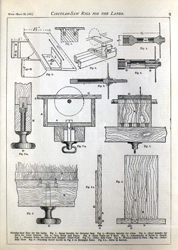
Since I only came up with the idea a few minutes ago, I'm going to cheat a little just to get the ball rolling. Today's issue features a treatise on bandsaws that I'm sure will be of interest to a good portion of our regular readers. To up the ante though, I'm also going to direct your attention to Matthias Wandel's homemade bandsaw article at woodgears.ca.
I've been watching Mr. Wandel's site for quite a while now, and I've found plenty of interesting and helpful info. If you aren't familiar with woodgears.ca, you are in for a treat. If you are really fussy about your bandsaw setup, I think you'll get a kick out of comparing the remarks in Work to the considerations applied to the homemade bandsaw project. -TIM
Disclaimer: Articles in Work: The Illustrated Weekly Journal for Mechanics describe materials and methods that would not be considered safe or advisable today. We are not responsible for the content of these magazines, and cannot take any responsibility for anyone attempting projects or procedures described therein.
The first issue of Work was published on March 23rd, 1889. The goal of this project is to release digital copies of the individual issues starting on the same date in 2012, effectively republishing the materials 123 years to the day from their original release.
The original printing was on thin, inexpensive paper. There are many cases of uneven inking and bleed-through from the page behind. Our copies of Work come from bound library volumes of these issues and are subject to unfavorable trimming, missing covers, etc. To minimize harm to these fragile volumes, we've undertaken the task of scanning the books ourselves. We do considerable post processing of the scans to make them clear but please bear with us if a margin is clipped too close, or a few words are unreadable. We would like to thank James Vasile and Karl Fogel for their help in supplying us with a book scanner and generally enabling this project to get off the ground.
You are welcome to download, print, and pretty much do what you want with the scan for your own personal purposes. Feel free to post a link or a copy on your blog or website. All we ask is a link back to the original project and this blog. We are not answering requests for commercial downloads or reprinting at this time.

Ahh yes. One for the ladies. The implication that it's Ladies' Night up in the Work offices caused me to spit coffee all over my screen. Where's Kool & The Gang when you need them? Probably out making furniture for their betrothed.
The project, of course, is innocent. After all, it's furniture. "A Ladies' Combined Work Table and Escritore" definitely represents a challenging and interesting build for anyone outfitting a would-be parlor, or bower, or salon. The remarkable thing here is that in 123 years, gender politics in the DIY scene have remained about the same; goofy. Sub-optimal at the very least.
Fair's fair. I'm not going to pretend even for a moment that I haven't sent myself to the bench for hours on end, hell bent on impressing the opposite gender with feats of makerly prowess. Still, it seems to me this tired yet persistent old trope is worth debunking, if only for a little while.
There is a selfish reason for this, of course. As one who makes and sells woodworking tools, I am forever concerned with the apparent gender disparity in our core markets. The sooner we can defetishize the act of making, the sooner we can get everyone in the sawdust/chips/sparks-making game.
I don't think this is even the first time I've said my piece on this, it's just that this week's Work issue reminds me of a schmaltzy, heteronormative nest-feathering home-improvement store commercial. "Make your lady a thing!" "Get your lawnmower clean!"
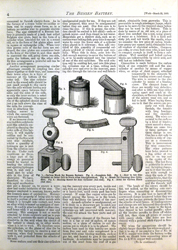
After all this I'm not sure what to make of the "Adaptation of Sewing Machine for Fret Saw Machine" article. Sewing machine and fretsaw ownership in my family fell along pretty distinct gender lines. Maybe the notion that this article is asking for trouble speaks to personal hang-ups more than anything else. I'll admit, though, it sounds like a pretty cool project. What is more, I have my OWN sewing machine to break trying this move. -TIM
Disclaimer: Articles in Work: The Illustrated Weekly Journal for Mechanics describe materials and methods that would not be considered safe or advisable today. We are not responsible for the content of these magazines, and cannot take any responsibility for anyone attempting projects or procedures described therein.
The first issue of Work was published on March 23rd, 1889. The goal of this project is to release digital copies of the individual issues starting on the same date in 2012, effectively republishing the materials 123 years to the day from their original release.
The original printing was on thin, inexpensive paper. There are many cases of uneven inking and bleed-through from the page behind. Our copies of Work come from bound library volumes of these issues and are subject to unfavorable trimming, missing covers, etc. To minimize harm to these fragile volumes, we've undertaken the task of scanning the books ourselves. We do considerable post processing of the scans to make them clear but please bear with us if a margin is clipped too close, or a few words are unreadable. We would like to thank James Vasile and Karl Fogel for their help in supplying us with a book scanner and generally enabling this project to get off the ground.
You are welcome to download, print, and pretty much do what you want with the scan for your own personal purposes. Feel free to post a link or a copy on your blog or website. All we ask is a link back to the original project and this blog. We are not answering requests for commercial downloads or reprinting at this time.